Work instructions drift. Here's why yours probably already have.
The quiet version of instruction drift
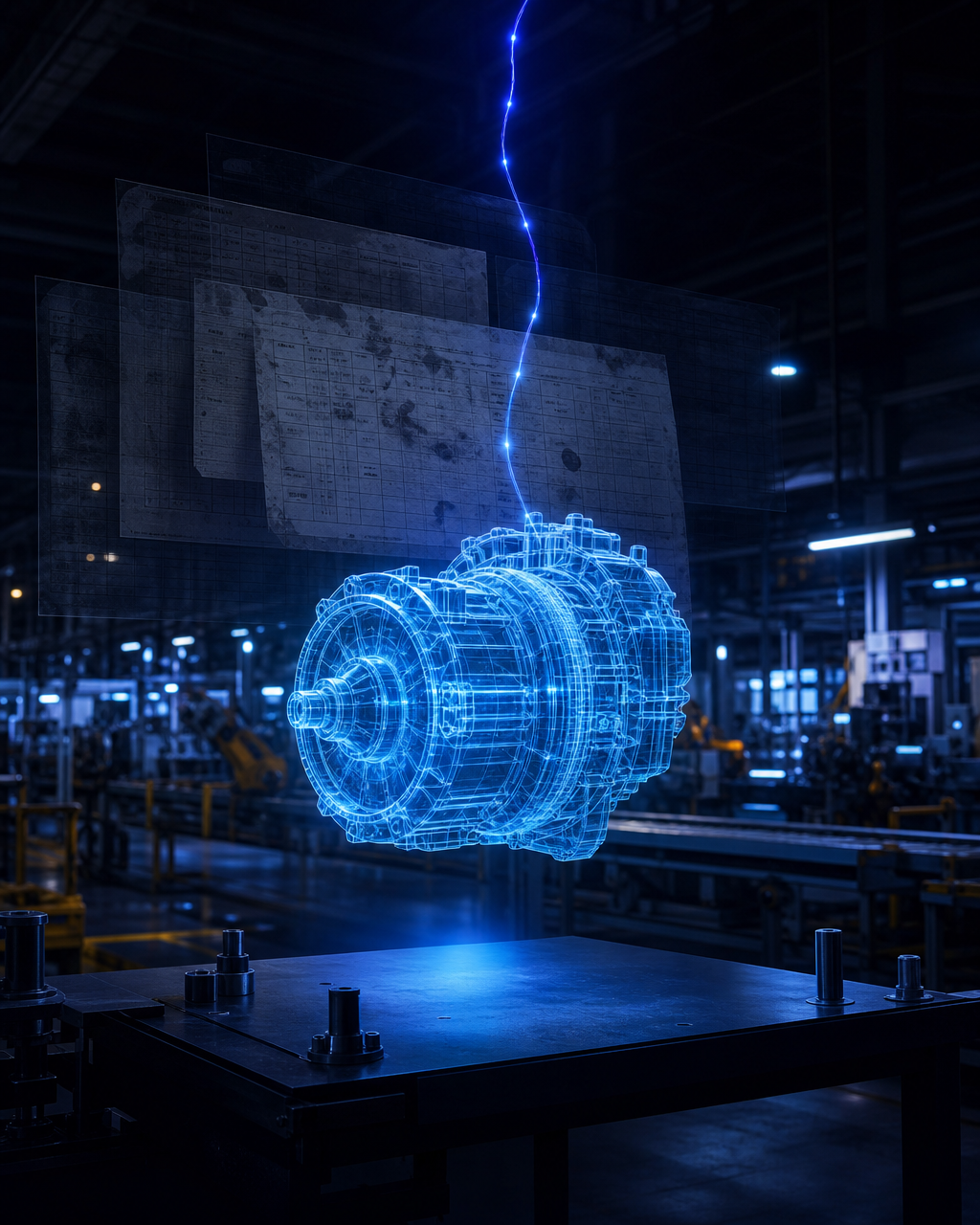
It doesn't happen all at once. A BOM change gets approved, engineering updates the model, and the work instruction for that assembly just doesn't get updated in time. Or it does get updated, but only for one of three variants. Or the update gets published, but the operator on the floor is still using a printed copy from the last revision.
None of these feel like crises when they happen. Together, over time, they become a chronic gap between what engineering intended and what the floor is actually doing.
Why SAP Visual Enterprise made this worse
SAP Visual Enterprise was built around authoring, not synchronisation. The assumption baked into that tool was that someone would manually keep the work instruction aligned with the BOM. That worked, more or less, when authoring was active and the library was maintained.
But SAP VEG is now sunset. Authoring is frozen. And every BOM change that happens from this point forward is one more degree of drift that nobody has a supported tool to close.
For manufacturers in aerospace, industrial equipment, or automotive tier-1 supply, that's not a theoretical risk. That's a compliance and quality problem accumulating with every product revision.
The BOM chain problem
Most work instruction tools treat the BOM as a reference. RealFusion treats it as the source of truth.
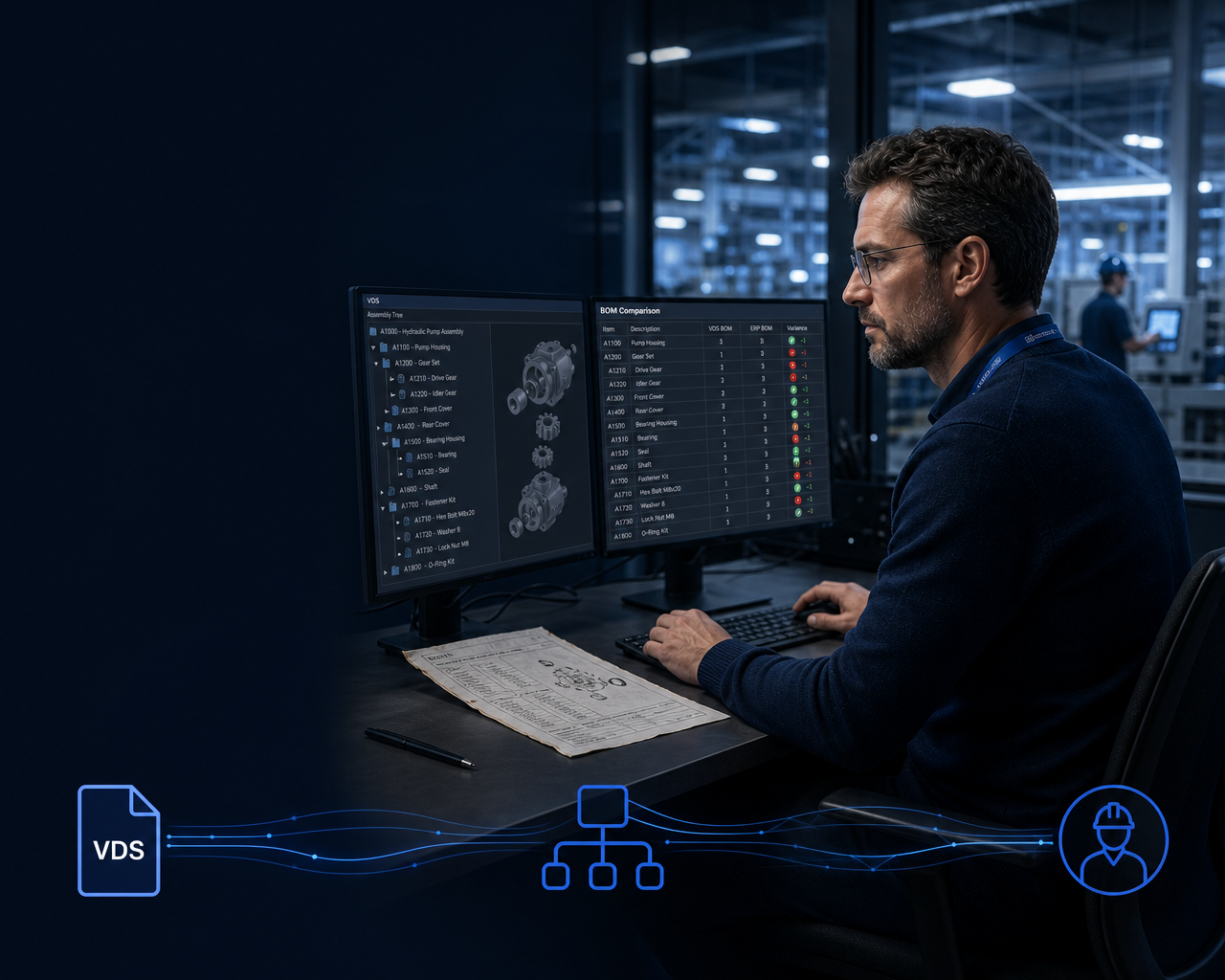
The RealNet data thread carries the full chain: engineering BOM to manufacturing BOM to order BOM. When you're building a specific product variant on a specific order, the instruction your operator receives is configured to that exact variant. Not the base model. Not a generic version. The right one.
That distinction matters enormously in complex discrete manufacturing. A single product family can have dozens of valid configurations. An instruction that's correct for one variant can be wrong or incomplete for another.
What staying current actually requires
For instructions to stay current without a permanent team of authors chasing BOM changes, you need a few things to be true:
- The work instruction needs to live on the same data thread as the BOM, not in a separate system that imports from it periodically.
- Changes upstream need to propagate downstream automatically, with human review at the right checkpoints rather than as the default mechanism for every update.
- AI agents need to assist with instruction improvement over time, so the authoring team is making decisions rather than doing transcription.
RealFusion is built around all three of these. The Supramono AI platform that sits behind it handles the generation and continuous improvement side. The RealNet hierarchy handles the data thread. Authors stay in control of what reaches the floor.
A solvable problem
Instruction drift has been treated as a chronic condition in manufacturing for a long time. The assumption is that it's the cost of complexity. That's not quite right. It's the cost of disconnected systems.
When the work instruction lives on the same connected thread as the product data, drift becomes something you can actually manage. That's the architecture RealFusion is built on, and it's the reason we're confident the problem is solvable rather than just manageable.

Virtualspace
Your SAP Visual Enterprise content, alive again.
Your SAP Visual Enterprise content, alive again.
Learn more about Virtualspace and get started today.
Visit Virtualspace