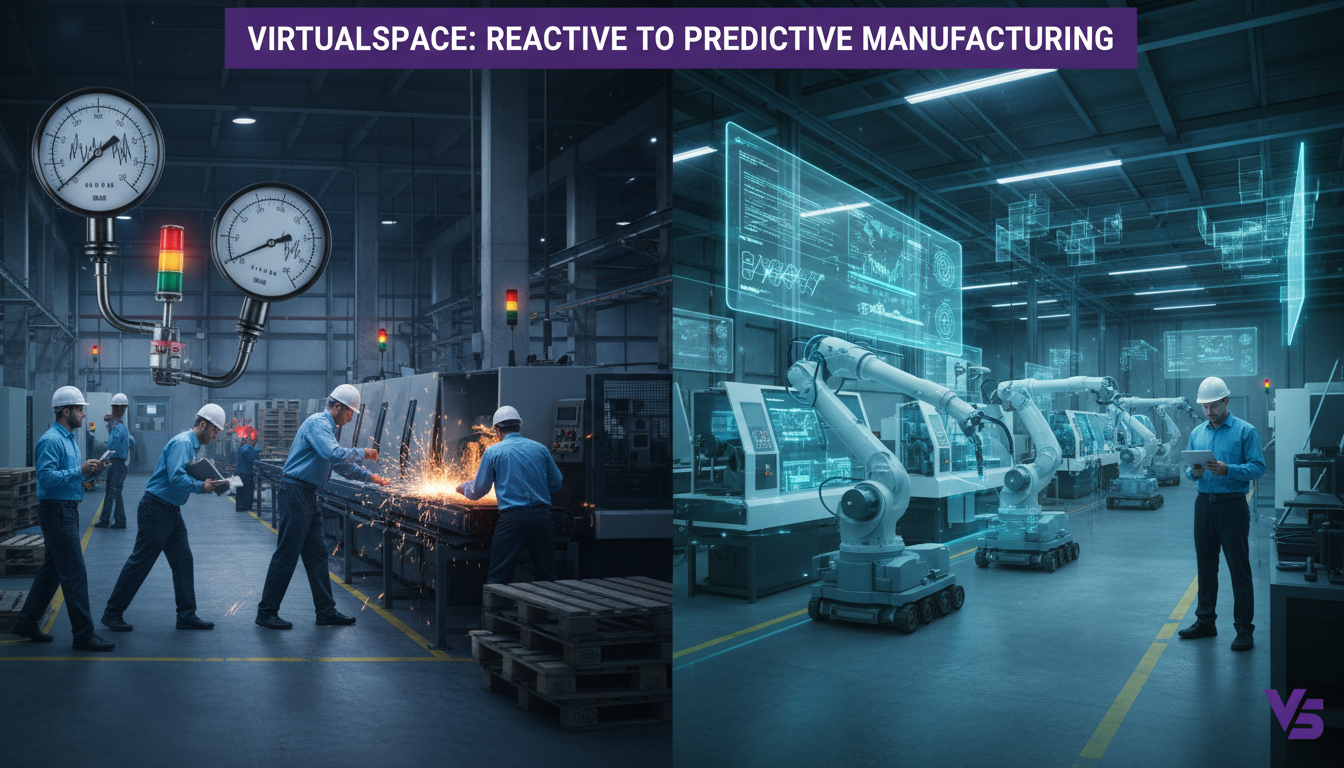
How Digital Twins Are Revolutionizing Predictive Maintenance in Manufacturing
How Digital Twins Are Revolutionizing Predictive Maintenance in Manufacturing
Manufacturing operations have entered a new era where unexpected equipment failures no longer need to devastate production schedules. The global digital twin market is predicted to grow from $21.14 billion in 2025 to approximately $149.81 billion by 2030, expanding at a CAGR of 47.9%, driven largely by manufacturers seeking to eliminate costly unplanned downtime through predictive maintenance.
For manufacturing engineering managers drowning in reactive maintenance cycles and work instruction chaos, digital twins offer a path to operational excellence that transforms how facilities predict, prevent, and respond to equipment failures.
The Current State of Manufacturing Maintenance
Traditional maintenance monitoring captures only 15-25% of critical asset performance parameters, leaving manufacturers blind to emerging problems until they become expensive failures. Unplanned downtime becomes a top challenge for most manufacturing operations, with maintenance functions needing to maximize equipment uptime and ensure sustainable availability, performance, and output quality.
The manufacturing landscape is increasingly divided between companies embracing digital transformation and those maintaining traditional approaches. Digital twins enable companies to achieve up to 20% reduction in unexpected work stoppages while optimizing maintenance schedules, creating a clear competitive advantage for early adopters.
What Are Digital Twins in Manufacturing?
Digital twin (DT) systems have emerged as a groundbreaking innovative framework in manufacturing, offering a virtual replica of physical processes and systems to enable real-time process monitoring, optimization, process control, and decision-making. By integrating advanced sensor networks, robust data management, and artificial intelligence (AI)-driven analytics, digital twins empower manufacturers to simulate, predict, and proactively resolve potential issues.
Unlike traditional simulation models, digital twins have evolved significantly with the incorporation of AI, which enhances their ability to acquire process knowledge, optimize scheduling, and autonomously control system variables. This evolution transforms DTs from passive representations into prescriptive, self-optimizing systems.
The Predictive Maintenance Revolution
With the predictive maintenance (PdM) market expected to grow by USD 33.72 billion at a CAGR of 33.5% from 2024 to 2029, its role in enhancing manufacturing efficiency is becoming more vital, optimizing production efficiency, reducing downtime, and enhancing asset reliability.
Key Benefits Manufacturing Leaders Are Achieving:
Dramatic Downtime Reduction: Facilities implementing strategic digital twin predictive maintenance achieve 50-70% reductions in unplanned downtime while improving maintenance efficiency by 35-45% compared to conventional monitoring approaches.
Cost Elimination: Using digital twins can slash maintenance costs by up to 40% while boosting asset uptime between 5-10%. Initial digital twin investments of $200,000-600,000 typically generate $1.2-3.5 million in annual savings through prevented failures and improved asset performance.
Predictive Accuracy: Digital twins provide comprehensive virtual representations enabling 90-95% predictive accuracy through complete system modeling, compared to traditional threshold-based monitoring systems.
Real-World Applications Transforming Manufacturing
Manufacturing Equipment Monitoring
Manufacturing facilities leverage digital twins to monitor production equipment, predict component failures, and schedule maintenance plan activities during planned downtime rather than experiencing disruptive breakdowns. The digital twin approach enables manufacturers to extend equipment lifespan, improve product quality, and maintain consistent production schedules.
Energy and Process Optimization
Energy and utilities sectors employ digital twin solutions to manage critical infrastructure including power generation equipment, transmission networks, and distribution systems. Wind turbines, for instance, benefit tremendously from predictive maintenance of industrial equipment where sensors monitor blade conditions, gearbox performance, and generator health.
Complex System Integration
Integrating existing enterprise systems like ERP (Enterprise Resource Planning) and MES (Manufacturing Execution System) consolidates operational and maintenance history, enriching the digital twin's dataset for more accurate modeling.
The Technical Foundation: How It Works
Digital twins continuously gather data from sensors embedded in machines, which track parameters such as temperature, vibration, pressure, and operational speed. This data is fed into a digital twin model, a real-time replica of the physical asset.
Essential Components:
-
Sensor Infrastructure: The foundation of any digital twin is the physical equipment equipped with sensors. These sensors collect continuous data on vibration, temperature, pressure, and electrical currents. For example, vibration sensors detect early bearing wear in heavy machinery manufacturing that precedes failure.
-
AI-Powered Analytics: AI-driven approaches are expected to revolutionize digital twin technology by significantly expanding current reliance on traditional simulations by enhancing real-time decision-making, predictive modeling, and process optimization. Unlike traditional simulation-based methods, AI has the potential to learn from vast amounts of historical information, physical simulation and real-time monitoring data to generate accurate predictions.
-
Real-Time Integration: By bridging the physical and virtual domains, DTs enable real-time monitoring, predictive analytics, and autonomous decision-making.
ROI Timeline and Implementation Strategy
Most manufacturers achieve positive ROI within 18-36 months through reduced unplanned downtime (50-70% reduction) and optimized maintenance scheduling. Prioritize critical assets with high failure costs, complex operating conditions, and sufficient data availability. Rotating machinery, process equipment, and control systems typically deliver fastest ROI. Start with 2-5 high-value assets to prove digital twin value before facility-wide deployment.
Overcoming Implementation Challenges
Computational burden, data variety, and complexity of models, assets, or components are the key challenges in design of digital twin systems. However, digital twin predictive maintenance achieves 88-97% accuracy across different asset categories, but requires 6-12 months of data collection to train virtual models effectively. Predictive capabilities improve significantly once systems learn asset-specific behavior patterns and environmental influences.
The Future Is Now: Manufacturing's Digital Transformation
The 2025 competitive environment rewards early adopters of advanced digital twin technology while penalizing reactive maintenance approaches that ignore comprehensive asset modeling capabilities. Success requires balancing proven digital twin applications delivering immediate predictive value with emerging virtual modeling innovations positioning for future competitive advantage and operational excellence.
Digital twins are revolutionizing predictive maintenance, with companies like Rolls-Royce applying the technology to enhance engine efficiency, reducing 22 million tons of carbon emissions. The technology has moved beyond pilot programs to deliver measurable business impact across manufacturing operations.
Taking Action: Your Next Steps
The transformation from reactive to predictive maintenance isn't just about technology—it's about competitive survival. The transformation lies in leveraging virtual asset models that mirror real-time equipment behavior, enabling precise failure prediction, and optimal maintenance scheduling weeks or months in advance.
For manufacturing engineering managers evaluating their options, the question isn't whether to implement digital twin predictive maintenance, but how quickly you can begin realizing the 50-70% reduction in unplanned downtime that leading manufacturers are already achieving.
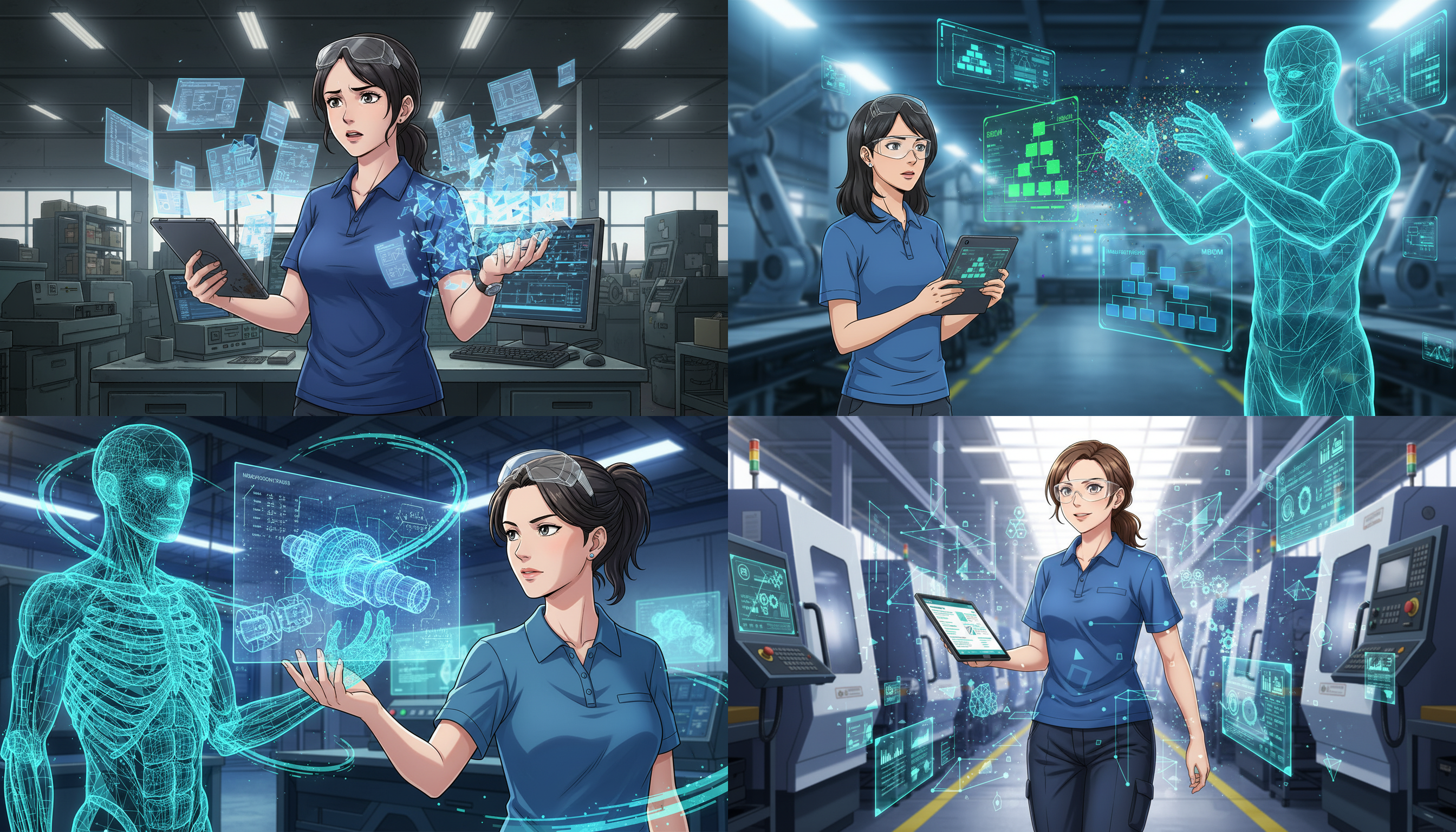
Ready to eliminate the chaos of reactive maintenance and outdated work instructions? Virtualspace's digital twin platform automates EBOM-to-MBOM transformation and integrates seamlessly with your existing manufacturing systems—delivering the predictive intelligence your operations need without the complexity of traditional enterprise solutions. Discover how Virtualspace can transform your manufacturing planning with a 30-day pilot that pays for itself.

Virtualspace
Manufacture Smarter. Plan Faster. Document Once.
Manufacture Smarter. Plan Faster. Document Once.
Learn more about Virtualspace and get started today.
Visit Virtualspace