Hidden Costs of Not Using Digital Twins in Modern Manufacturing
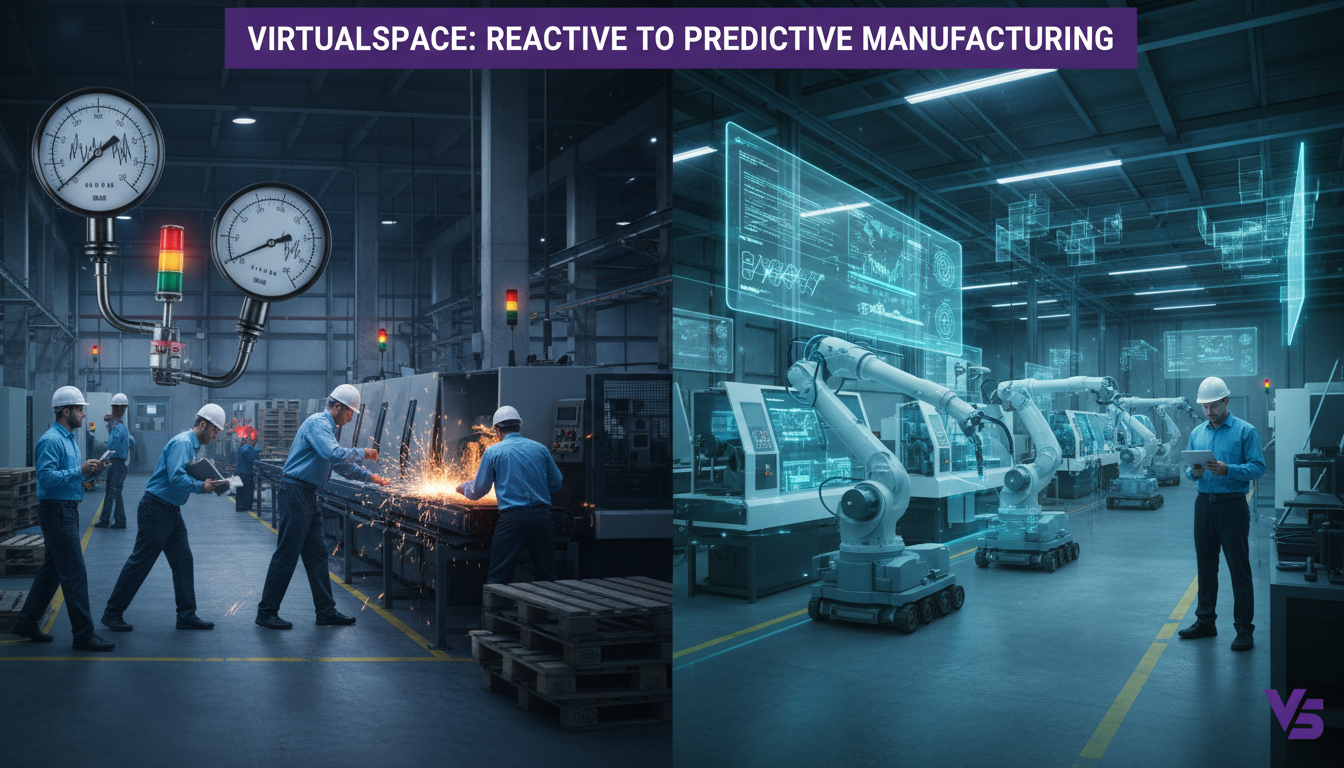
The Hidden Costs of Not Using Digital Twins in Modern Manufacturing
Every minute your manufacturing operation runs without digital twin technology, money is walking out the door. The global manufacturing industry loses over $1 trillion every year in unplanned downtime, quality failures, wasted energy, and missed production targets.
While 2026 marks a turning point where around 75% of businesses use digital twins, manufacturers still operating with legacy planning systems face an escalating cost penalty. The question isn't whether you can afford to implement digital twin technology—it's whether you can afford not to.
The Trillion-Dollar Visibility Gap
The gap between what factories could achieve — if they had complete, real-time intelligence about everything happening inside them — and what they actually achieve, operating with incomplete information, reactive processes, and tools that were designed for a slower, simpler industrial world, represents the true cost of digital invisibility.
Manufacturing without digital twins means:
- Reactive maintenance instead of predictive intervention
- Manual planning cycles that take weeks instead of hours
- Quality issues discovered at inspection rather than prevented at source
- Production bottlenecks identified after they've already caused delays
Quantifying the Hidden Costs
1. Unplanned Downtime Penalties
Of organizations that have used digital twin technology, 65 percent have seen downtime and operational costs reduced. More than half (55 percent) report improved predictive maintenance. Without digital twins, manufacturers continue to experience:
- 62% more unplanned downtime compared to digital twin users
- Unexpected work stoppages costing as much as €3.03 million per month, adding up to nearly €36.41 million annually for capital-intensive operations
- 15-25% more unplanned downtime due to lack of predictive maintenance capabilities
2. Manufacturing Planning Inefficiencies
Traditional manufacturing planning creates cascading costs:
- EBOM-to-MBOM translation consuming 30-60% of manufacturing engineering time
- Work instruction authoring costing $5,000-$15,000 per product variant
- Variant configuration management requiring proportional effort increases with each product variation
- Change management cycles taking 3-4 weeks instead of days
Manufacturing planning is cited as the top challenge for balancing cost, quality, and time-to-market. Notably, 81% of leaders now say supplier sourcing and management is too time-consuming and costly, up from 73% in 2025.
3. Quality and Rework Costs
Quality issues can lead to scrap and rework, increasing processing times and costing businesses in terms of wasted materials and labor time. Without digital twin monitoring:
- Manufacturers miss opportunities to reduce defective products by 75%
- Quality problems cascade through production before detection
- Product quality improvements of up to 25% remain unrealized
4. Development and Innovation Delays
Digital twins can shorten development cycles by up to 50% and enhance supply chain performance by approximately 20%. Manufacturers operating without this capability face:
- Extended product development timelines
- Higher prototyping costs
- Slower market response times
- Reduced innovation cycles
The Competitive Intelligence Gap
The early adopters — the manufacturers who started their digital twin journeys four or five years ago — are now operating at a level of intelligence and efficiency that is structurally difficult to compete with through traditional means. Consider what it means when a competitor can predict every equipment failure weeks in advance, operate every process at continuously optimized parameters, eliminate quality escapes before they become production defects, and reduce energy consumption by 20 percent — while you are still responding to failures after they occur.
Energy and Sustainability Costs
Organizations can cut building-related greenhouse gas emissions by as much as 50% and reduce operating costs by up to 35% with digital twin technology. Without this visibility:
- Energy waste remains invisible and unaddressed
- AI-driven energy management systems achieving average energy savings of 12% are unavailable
- Sustainability reporting lacks the granular data needed for optimization
The Implementation Reality Check
A focused pilot on a single production line or key asset can range from $50,000 to $200,000. Compare this investment to:
- Monthly unplanned downtime costs: Often exceeding the entire digital twin investment
- Annual quality failure expenses: Frequently representing 5-10x the implementation cost
- Manufacturing planning inefficiency costs: Consuming millions in engineering hours annually
Digital twin investments typically yield positive ROI within 12 to 36 months, with some, especially in manufacturing, seeing initial results in as few as 3-6 months. Companies often see substantial maintenance cost reductions of 25-55% and operational efficiency improvements of 15-42% within this timeframe.
The 2026 Urgency
By 2026, digital twin technology has reached a level of maturity, cost-effectiveness, and ubiquity that marks a qualitative shift. The global market exceeds $73 billion. More than 60 percent of Fortune 500 companies have active digital twin programs.
The cost of delay is accelerating. More than 68 percent of industrial manufacturers in developed economies already have active digital twin programs as of 2026. Every quarter without digital twin capabilities widens the performance gap with competitors who are already benefiting from predictive insights, automated optimization, and real-time intelligence.
Taking Action
The hidden costs of not using digital twins in modern manufacturing are becoming visible through competitive disadvantage, operational inefficiency, and missed opportunities. Digital twins work. The numbers prove it — 35-50% faster troubleshooting, 30-40% less downtime, 15-20% better OEE. When implemented with clear business objectives and proper system integration.
For discrete manufacturers still relying on manual EBOM-to-MBOM translation, reactive maintenance, and static work instructions, the question isn't whether digital twin technology delivers value—it's whether your operation can survive without it.
The manufacturers winning in 2026 aren't waiting for perfect solutions. They're implementing practical digital twins that solve their highest-cost problems first, proving ROI in months rather than years.
Ready to stop the hidden cost bleeding? Discover how Virtualspace can eliminate your manufacturing planning inefficiencies with a 30-day pilot that pays for itself.

Virtualspace
Manufacture Smarter. Plan Faster. Document Once.
Manufacture Smarter. Plan Faster. Document Once.
Learn more about Virtualspace and get started today.
Visit Virtualspace